Tell us about the job
Takes about a minute. No obligation.
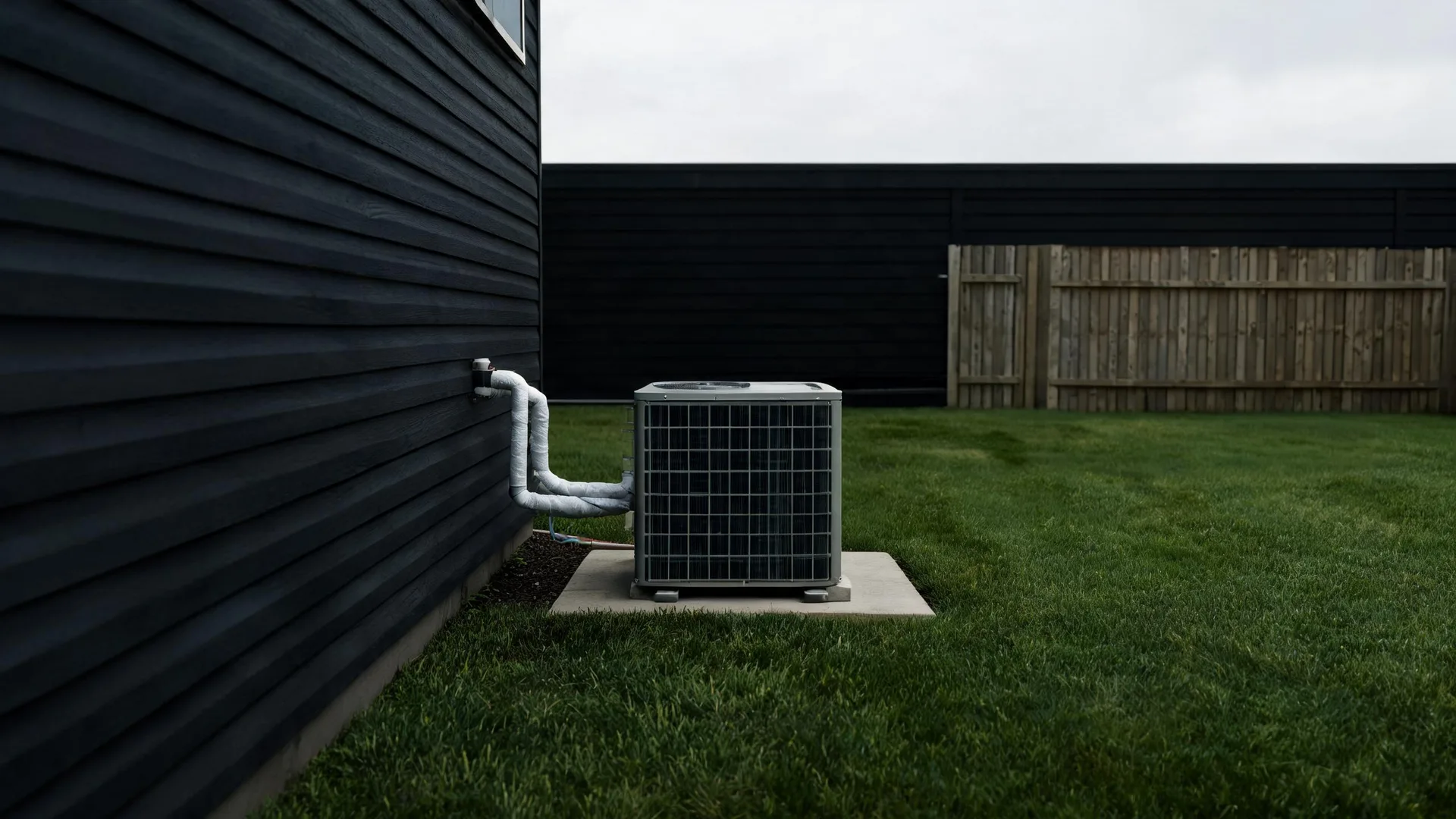
Sizing a central AC system for Lincoln County starts with what the compressor is actually asked to do here. Homes in Lincoln County, NV run cooling about three months a year, from June through August. The compressor, the condenser fan, and the contactor sit idle through most of the calendar year, and equipment that was undersized or loosely installed at startup rarely shows the strain until the system comes back on in June and every neighbor's unit is running too. A contractor quoting a new installation has to account for that idle period: components that stand off for months need commissioning checks before the first season, not after the first failure.
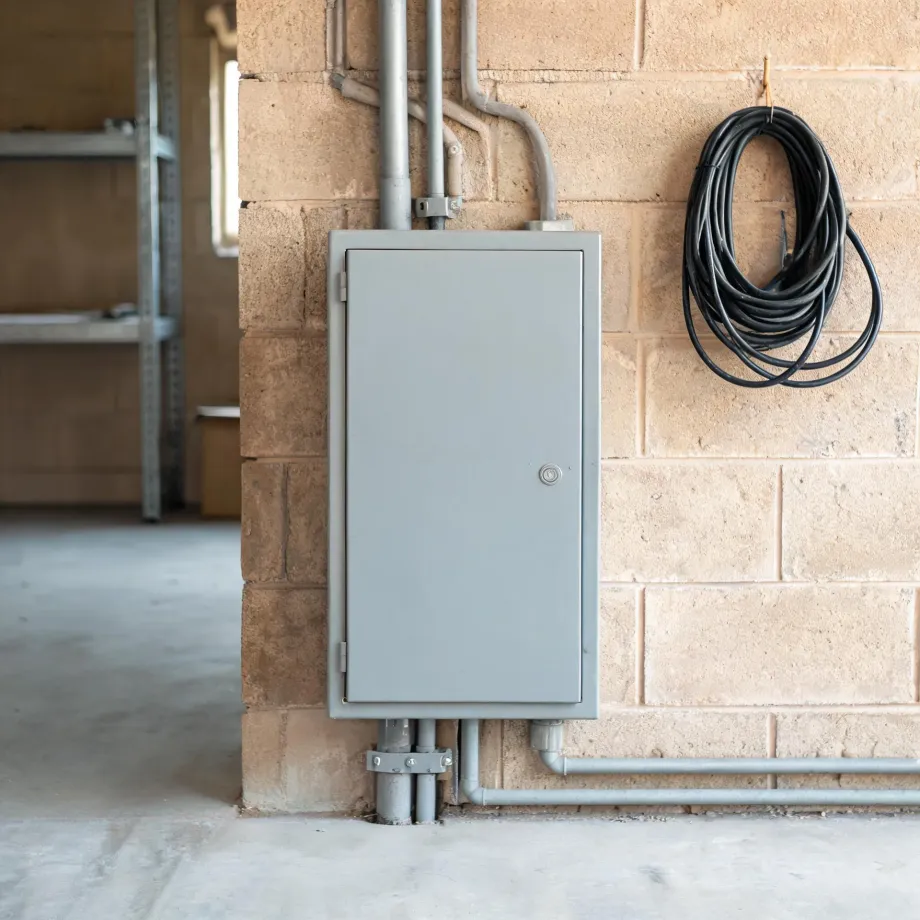
Ductwork sized and routed for an older system is what a contractor hits first in a lot of Lincoln County homes. Half the homes in Lincoln County, Nevada were built in 1982 or earlier (2020-2024 ACS 5-year). That puts the distribution layout, not the new unit itself, at the center of the installation quote. A contractor who opens the registers and measures airflow before pricing the job is working from what the house actually has, not from what it was permitted with.
What a Central AC System Includes
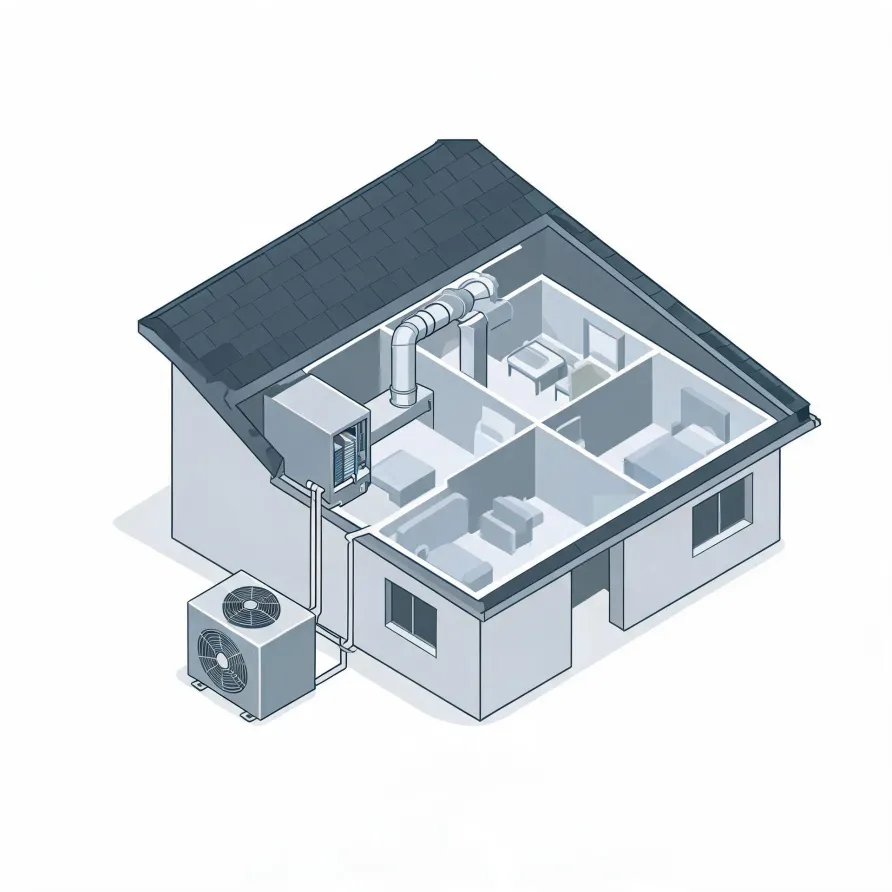
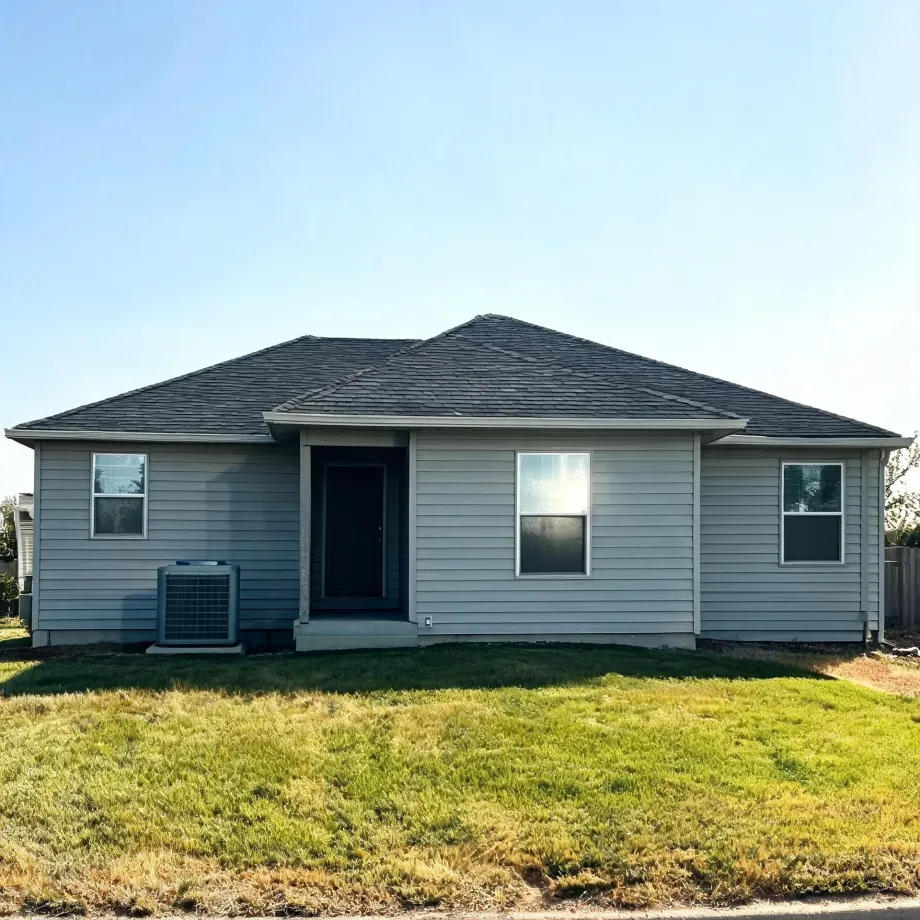
The outdoor condenser unit sits outside the house, usually on a concrete pad at the side or rear, and holds the compressor and condenser coil. Inside, the air handler or furnace-mounted evaporator coil sits in the utility space, attic, or closet where conditioned air enters the duct system. These are the two main pieces a contractor brings to the job.
The refrigerant line set runs between the outdoor and indoor units, connecting the two halves of the system through the wall or floor. A thermostat mounts on an interior wall and gives the homeowner control over when the system runs. The condensate drain line carries moisture pulled from the air out of the house.
The drawing shows a representative layout, and a licensed contractor determines exactly what applies to this house.
Get matched in Lincoln CountyLincoln County, Nevada, by the numbers
39 severe weather events were recorded in Lincoln County, Nevada between 2015 and 2024.
NOAA National Centers for Environmental Information, Storm Events Database, bulk CSV export, events 2015-01-01 through 2024-12-31.Half the homes in Lincoln County, Nevada were built in 1982 or earlier (2020-2024 ACS 5-year).
U.S. Census Bureau, 2020-2024 American Community Survey 5-Year EstimatesLincoln County, Nevada holds 2,471 housing units (2020-2024 ACS 5-year).
U.S. Census Bureau, 2020-2024 American Community Survey 5-Year EstimatesOwners occupy 75.0% of the occupied homes in Lincoln County, Nevada (2020-2024 ACS 5-year).
U.S. Census Bureau, 2020-2024 American Community Survey 5-Year EstimatesRules & Standards Behind Central AC Installation in Lincoln County, Nevada9 sourced rules and standards
What happens during an HVAC installation in Lincoln County
Split-system central air conditioners rated below 45,000 Btu/h manufactured on or after January 1, 2023 must meet a federal minimum of 13.4 SEER2.
Split-system central air conditioners rated at or above 45,000 Btu/h manufactured on or after January 1, 2023 must meet a federal minimum of 13.4 SEER2.
Split-system central air conditioners manufactured between January 1, 2015 and December 31, 2022 had to meet 13 SEER, the metric that preceded SEER2.
Single-package central air conditioners manufactured on or after January 1, 2023 must meet a federal minimum of 13.4 SEER2.
Space-constrained central air conditioners manufactured on or after January 1, 2023 must meet a federal minimum of 11.7 SEER2.
Federal efficiency standards for split-system central air conditioners and heat pumps are set on each certified combination of outdoor unit and indoor coil rather than on the outdoor unit alone.
Residential and light commercial air conditioning and heat pump systems assembled in the field, including mini-splits and unitary systems, may not be installed on or after January 1, 2025 using a refrigerant with a global warming potential above 700.
A field-assembled system whose specified components were all manufactured or imported before January 1, 2025 carries no installation compliance date under the refrigerant restrictions and may still be installed.
Licensing and Legal Requirements in Lincoln County, Nevada
In Nevada refrigeration and air-conditioning work is specialty contracting, and a general building contractor may not perform it without holding the licence for that specialty.
Severe Weather in Lincoln County
Weather puts a workload on HVAC equipment, and that workload varies by location. For central AC installation in Lincoln County, the local pattern of extreme conditions shapes what a system needs to handle over its life.
39 severe weather events, 2015–2024. Source: NOAA National Centers for Environmental Information, Storm Events Database.