Once you send the form, finding a pro is off your list.
No. Nevada air is dry almost all year, and a dry climate is exactly where a dehumidifier stops being useful next to an air conditioner. Your AC already pulls moisture out of the air as it cools, and with humidity this low outside, there's little left for a dehumidifier to do.
A central AC cools the house by passing air over a cold coil. Moisture collects on that coil and drains away as a side effect of normal operation. In a humid state that's not enough on its own. Here, where the air coming in is already dry, it usually handles the job by itself.
Where this goes wrong is monsoon season, late July into September, when a storm pushes humidity up for a few days at a time. If a room feels sticky during one of those stretches, that's the air, not your AC failing. It passes once the weather clears.
If a room still feels damp once the air outside has dried back out, that's worth a second look. It could mean the AC is undersized for that room, a duct run isn't delivering enough air, or something in the system isn't cycling the way it should. A contractor who services AC systems in your part of Nevada sees this pattern every summer and can tell quickly whether it's the equipment or just a run of humid days.
Send the request and that's the last part you have to track down yourself. It goes to one licensed contractor working near you, not a handful of companies competing for your callback, and they're familiar with the kind of system installed in homes like yours. From there, it's off your plate.
Do I need a dehumidifier with my AC in Nevada?
You keep the air comfortable for whoever's home, and you've heard that AC and a dehumidifier go together. Before you add another unit to the system, you want to know if it actually does anything here, or if it's just another box running up the power bill for no reason.
No, not in Nevada
A dehumidifier earns its keep in places where the air outside stays thick with moisture for months, so an AC alone can't keep up. That's not Nevada. The air here runs dry most of the year, and your AC already wrings out what little moisture is in it as part of cooling the house. Adding a dehumidifier on top of that gives the air almost nothing left to pull out. It would run, use power, and not change how the house feels. Where power is cheap, that's not a big loss, but it's still a unit doing work the AC already finished. The exception is if your house sits somewhere unusually damp for the area, but for most homes here, the AC alone is enough.
National Weather Service records put the summer dew point here at an average of 37°F across June, July and August. Anything under 55°F reads as dry air, so this is well below the point where moisture in the air becomes a problem. That's why your air conditioner isn't fighting humidity along with heat. It's pulling heat out of dry air, which is a simpler job, and you won't see the clammy, sticky feel in your home that a dehumidifier is built to fix. If your AC still leaves rooms feeling off, that points to the system itself, not the air outside it. Get that checked and the fix is usually direct.
One installer gets your project, so there's no bidding war over it.
Sending the form costs nothing.
When a dehumidifier makes sense here
If your swamp cooler or your AC runs short cycles because the house cools fast and shuts off again, moisture in a single room can build up even with dry air outside. A bathroom with no vent fan, or a laundry room that stays shut, can hold damp air no matter what the dew point is doing outside. In those cases a small dehumidifier in that one room does something your AC can't, because the AC is sized and placed to treat the whole house, not one closet or one corner that never gets airflow.
Why most homes here go without one
A whole-house dehumidifier is built to pull down moisture loads that a dry climate like this one doesn't produce. Your AC is already removing what little moisture is in the air as it cools, and with a summer dew point this low, there's nothing left over for a second system to work on. Adding one here means running equipment against air that's already dry, which costs you power for a problem your house doesn't have. Most homeowners in Nevada find the AC alone keeps rooms comfortable without anything added to it.
Cooling the air and drying it happen at the same time, but they're not the same job. Air moves across the cold evaporator coil, and whatever moisture is riding in it condenses there, the same way water beads on a cold glass. That water drips into a drain pan and leaves through the condensate line. None of that is the thermostat's concern. It watches temperature only, so once the house reaches the set point, the system shuts off, whether the air still holds moisture or not. A dehumidifier doesn't work that way. It runs off a humidity setting, so it keeps pulling moisture even after the room already feels cool. In Nevada, the coil usually isn't doing much of that work anyway. Dry air outside means there's little moisture to condense off in the first place, so the drain pan stays mostly dry and the condensate line sees light flow. A dehumidifier earns a place in a specific room that holds moisture the AC's short runtime doesn't reach, not across the whole house.
How your AC handles moisture
Your AC lowers humidity as a side effect of cooling, not as its main job, by pulling air across a cold evaporator coil.
Moisture in the air condenses on that coil and drips into a drain pan, then runs out through a condensate line.
The thermostat only tracks temperature, so the system stops running once the house hits the set point, whether or not any moisture is left in the air.
A dehumidifier works the opposite way, it runs on a humidity setting and keeps removing moisture even after the room feels cool enough.
In a dry climate the coil rarely has much moisture to pull off, so the condensate line stays light and the drain pan sees little water.
A stand-alone dehumidifier earns its place when one room holds onto moisture that the AC's short runtime never reaches, not because the whole house needs it.
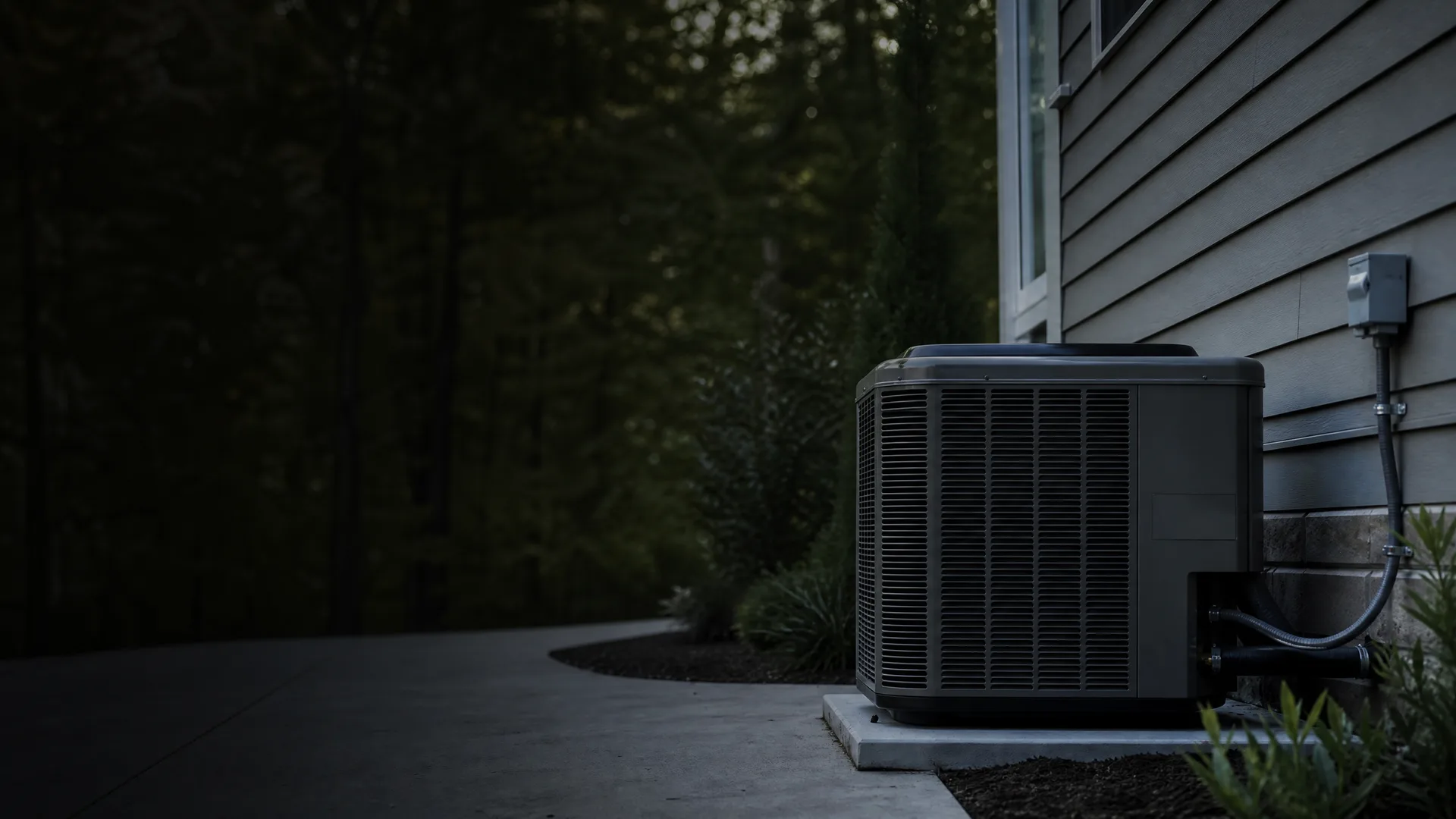
An AC like this is doing its job with the dry air Nevada gives it, cooling the house without any extra help.
Dirt on the grilles and a strained unit like this won't be fixed by a dehumidifier, since the problem is airflow, not moisture.
1
Warm air from the house passes across the cold evaporator coil.
2
Moisture in that air condenses into water on the coil surface.
3
Condensed water drips down into the condensate drain pan below.
4
The pan channels water out through the condensate line outside.
Before you get your air conditioner installationAfter you get your air conditioner installation
37°F average dew point
That reading, taken over June, July and August, sits far under the 55°F mark where air starts to feel damp. Dry air like this is why a dehumidifier has little left to pull out.
Power costs 13.26 cents per kilowatt-hour statewide
At 13.26 cents a kilowatt-hour, running your AC harder than it needs to shows up fast on the bill. A dehumidifier pulling its own power on top of that, in air this dry, is just added cost for moisture that isn't there to remove.
EIA-861 2025 statewide residential average
Nevada's dry air means your AC is already doing the job a dehumidifier would be asked to do, and in most rooms there's nothing left for a second unit to pull out. Where you do run into trouble, like a bathroom with no vent fan or a laundry room that keeps a door shut, it's a short cycling or airflow problem, not a humidity problem, and it calls for someone who can look at the room and the equipment together rather than guess. A local contractor who installs AC systems in this kind of dry heat knows which rooms in a house actually struggle and which ones just need the existing system running clean. Once you send the request, you're matched with one licensed contractor working in your area, not a list of companies competing for the call, so the person who shows up is someone who sees this exact setup, dry summers and all, season after season.