Tell us about the job
Takes about a minute. No obligation.
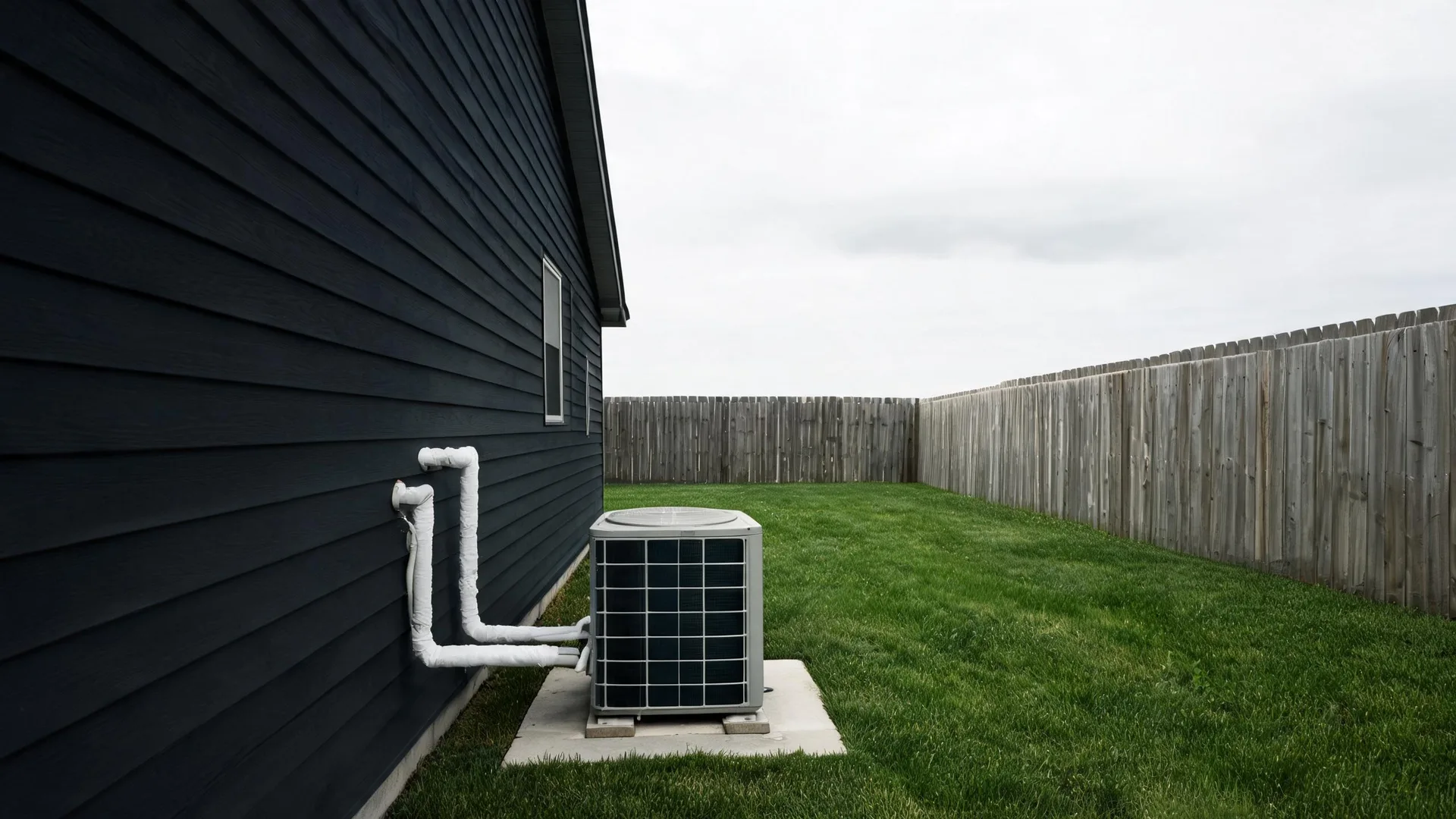
The compressor and condenser fan in a Douglas County home spend almost the entire year sitting idle, then run hard through a single summer month. Homes in Douglas County, NV run cooling in a single month of the year, July. Contactors and fan motors that cycle repeatedly through that short window accumulate their wear fast, and a fault that developed during last July's heat sits undetected until the unit starts up again. A contractor diagnosing a repair here checks those high-cycle components first, because the refrigerant side and the electrical contacts take the whole season's stress in a compressed stretch rather than spreading it across cooler shoulder months that never arrive.
Ductwork and wiring in a house this old were put in for a system that is long gone, and whatever runs in it now is the product of at least one intervening swap. Half the homes in Douglas County, Nevada were built in 1990 or earlier (2020-2024 ACS 5-year). When a repair opens a unit in stock like this, what decides the job is whether the parts that system takes are still in production. A compressor or control board for a unit installed mid-cycle in an older house can sit outside the current supply chain, and that changes both the timeline and what a contractor can honestly recommend.
The Parts of a Central AC a Contractor Checks First
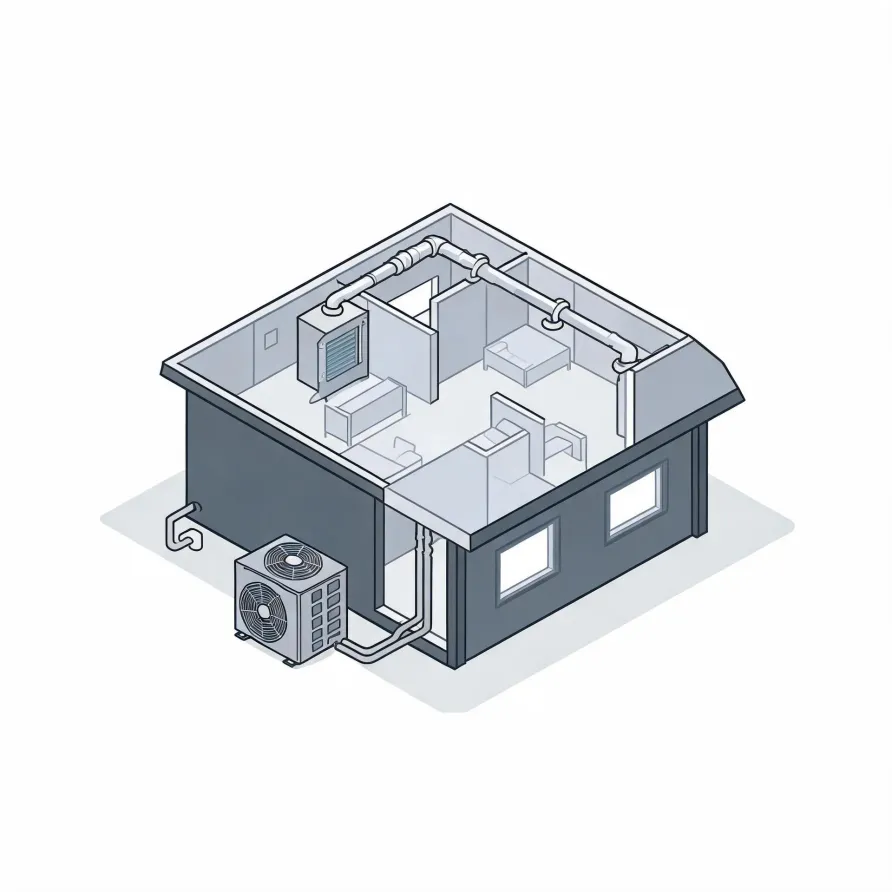
The outdoor condenser unit sits outside the house, usually on a concrete pad beside the foundation, and it carries the compressor and condenser coil. These are the parts a contractor reaches first, because a failed compressor or a fouled coil accounts for a large share of the calls where the system runs but produces no cooling.
Inside the house, the air handler holds the evaporator coil and the blower fan, typically in a closet, attic, or utility room. The refrigerant line set connects the two units, and the thermostat on the wall tells the whole system when to run. A fault in any of these can look like a compressor problem until a contractor traces it back.
The drawing shows a representative layout, and a licensed contractor determines which components apply and what condition they are in for your specific home.
Get matched in Douglas CountyDouglas County, Nevada, by the numbers
513 severe weather events were recorded in Douglas County, Nevada between 2015 and 2024.
NOAA National Centers for Environmental Information, Storm Events Database, bulk CSV export, events 2015-01-01 through 2024-12-31.Half the homes in Douglas County, Nevada were built in 1990 or earlier (2020-2024 ACS 5-year).
U.S. Census Bureau, 2020-2024 American Community Survey 5-Year EstimatesDouglas County, Nevada holds 24,825 housing units (2020-2024 ACS 5-year).
U.S. Census Bureau, 2020-2024 American Community Survey 5-Year EstimatesOwners occupy 78.8% of the occupied homes in Douglas County, Nevada (2020-2024 ACS 5-year).
U.S. Census Bureau, 2020-2024 American Community Survey 5-Year EstimatesCodes & Standards Governing Central AC Repair in Douglas County, Nevada9 sourced rules and standards
What the Repair Visit Looks Like
Split-system central air conditioners rated below 45,000 Btu/h manufactured on or after January 1, 2023 must meet a federal minimum of 13.4 SEER2.
Split-system central air conditioners rated at or above 45,000 Btu/h manufactured on or after January 1, 2023 must meet a federal minimum of 13.4 SEER2.
Split-system central air conditioners manufactured between January 1, 2015 and December 31, 2022 had to meet 13 SEER, the metric that preceded SEER2.
Single-package central air conditioners manufactured on or after January 1, 2023 must meet a federal minimum of 13.4 SEER2.
Space-constrained central air conditioners manufactured on or after January 1, 2023 must meet a federal minimum of 11.7 SEER2.
Federal efficiency standards for split-system central air conditioners and heat pumps are set on each certified combination of outdoor unit and indoor coil rather than on the outdoor unit alone.
Residential and light commercial air conditioning and heat pump systems assembled in the field, including mini-splits and unitary systems, may not be installed on or after January 1, 2025 using a refrigerant with a global warming potential above 700.
A field-assembled system whose specified components were all manufactured or imported before January 1, 2025 carries no installation compliance date under the refrigerant restrictions and may still be installed.
Licensing and Legal Requirements in Douglas County, Nevada
In Nevada refrigeration and air-conditioning work is specialty contracting, and a general building contractor may not perform it without holding the licence for that specialty.
Severe Weather Events in Douglas County
Weather puts real stress on cooling equipment. How hard a system works, how often it cycles, and how long it holds up are all shaped by local conditions, which is why the pattern of severe weather in Douglas County belongs on a page about AC repair.
513 severe weather events, 2015–2024. Source: NOAA National Centers for Environmental Information, Storm Events Database.